


After defeating Atletico Madrid to put his Real Madrid side within three good performances of winning its first Copa del Rey since 1993, Jose Mourinho said two very interesting things in the postmatch news conference.
First, he would only confirm that "I'll stay at the club 'til the end of the season and then … we'll see." And when asked about his relationship with Madrid director general Jorge Valdano, he answered: "No comment."
So it is no longer merely speculation, but on the record. Mourinho is considering that this might be his only season at the Bernabeu.
He doesn't want it to be that way.
Mourinho hasn't made any irrevocable decisions, of course, but he is sufficiently angry at Madrid's treatment of him that, despite there being no obvious club to tempt him away just at the moment, he might allow one of his dream jobs to last less than 12 months.
He feels a lack of support from above about refereeing issues, the mauling he took from Sporting's Manuel Preciado, his requests for an additional striker to be signed, his request that Pepe be given a new contract and, above all, Jorge Valdano's sniping at him in the media.
For it to have reached this stage is a commentary on the asinine and inadequate way in which Real Madrid is being run.
Here are five clear reasons those in power at the Bernabeu -- namely president Florentino Perez and Valdano -- must take stock, accept their errors and try to back the man they appointed, knowing fully well what he was like, before they lose the perfect coach.
1. In football, tomorrow never comes -- it's about the here and now
While there are two subsidiary reasons for Madrid's unwillingness to buy the striker Mourinho has been demanding since July (overall debt and its unhappiness with Mourinho's request for Hugo Almeida in this transfer window), it is principally because the club is saving for the big purchase of Fernando Llorente in the summer.
But the Cup, the Champions League and La Liga are here to be won right now.
Real Madrid faces the threat of a third season without a trophy. Florentino Perez is now approaching four and a half trophy-less years as Real Madrid president, split across two reigns.
Mourinho told Real it was short one striker in the summer. The club ignored him.
Gonzalo Higuain is out for a significant period, and that equals the loss of a guy who over the past two and a half seasons is averaging 22 goals per term. Meanwhile, Barcelona just closed its books on the first half of the season with an all-time Spanish scoring record.
Anyone who can't see that Real Madrid needs an extra goal supply right now is not only shortsighted, but also plain stupid.
2. Mourinho is currently more important to Real Madrid than Florentino and Jorge Valdano put together
Florentino and Valdano are at risk of becoming the Laurel and Hardy of the footballing world.
Last season's Champions League final was contested by a handful of players -- Walter Samuel, Esteban Cambiasso, Samuel Eto'o, Wesley Sneijder and Arjen Robben -- who were signed by Florentino and then discarded by either him or Valdano, only for them to demonstrate their class and trophy-hunger at other clubs.

It is Laurel and Hardy-esque to routinely buy long and sell short in the transfer market, losing millions and your credibility in the process. But that's what these guys are doing right now.
Florentino, having been president for approximately seven of the past 10 years, has only produced youth team players who either succeed elsewhere (Negredo, Mata) or need to be bought back after showing their worth somewhere else (Arbeloa, Granero).
At the club right now, Iker Casillas, who made his debut in 1999, is the only "canterano" (Madrid youth product) who has made it to the first team and stayed there.
Yet in Mourinho, Madrid signed a guy who has not only proved he can win trophies, but who also promised at the start of the season that he would develop a "footballing philosophy" from top to bottom so that youth talent would be developed similarly to Barcelona's prodigious La Masia system. If the powers that be drive him out, they lose that -- and it's back to the drawing board. Plus, FC Barcelona didn't put Messi, Xavi and Iniesta on the Ballon D'Or podium by going through 10 coaches in seven and a half years, each time heralding a new opinion on youth development and its importance, as Madrid has done.
3. Mourinho is the right man to wage war on Barcelona
The Special One inherited a losing Real Madrid team and a squad that was inadequate and imbalanced. So the overwhelming nature of the 5-0 Clasico defeat was far from being entirely his fault.
And I can say with confidence that while the Barca players don't fear him, they feel almost universal respect and wariness for the Portuguese Man o' War.
With Chelsea, Mourinho regularly beat or reduced to stalemate one of the best Barcelona sides in living memory, and one that was good enough to conquer both Spain and Europe. With Inter Milan, he nullified Barca, out-coached Pep Guardiola tactically and proved that if you are faced with a brilliant footballing side, your players need to work harder, to be better briefed and to play with burning inspiration.
If Madrid is to achieve that, then it needs Mourinho.
4. The cup with the big ears is his specialty
The European Cup is what gave Real Madrid its fabled status. Without it, Los Blancos are just another club. It is approaching seven years since Madrid even reached a quarterfinal of the Champions League, during which time Mourinho has won it twice.
At face value this year, Barcelona is the favorite to win the competition. But this isn't like La Liga or the Copa del Rey. Others will produce better attempts to haul down Guardiola's side -- Madrid is not as isolated in the fight against excellence as it is domestically.
It is not a vintage year around Europe and, should someone else catch Barcelona on a bad day, Madrid shouldn't be petrified at the prospect of facing Chelsea, Milan, Arsenal or even Inter and Manchester United.
This is a winnable tournament. Back Mourinho now, win it and argue in the summer. Better still, show Valdano the door.
5. Mourinho is already doing an excellent job
Barcelona's record points and goals at the halfway stage of any La Liga season in history tells the tale of what a challenge Mourinho and Real Madrid face -- four points behind Pep and the boys.
Yet despite the Catalan club's brilliance, and even despite the 5-0 humiliation at Camp Nou in November, Real Madrid was only two points off equaling the record-breakers' tally at the halfway stage before the surprise draw at Almeria on Jan. 16.
This despite Mourinho being new to the club, having signed several new young players and having to cope with the internal sniping that brought him to the drastic point, on Thursday night, of winning 4-1 over two games against bitter city rivals Atletico, only to then hint that his time at the Bernabeu might be up sooner than later.
All around Europe, people are laughing in disbelief. Like or loathe Jose, you know what you are getting when you sign him up. So for Madrid to start regretting now that Mourinho is devious, insistent, media-friendly and hellishly annoying when he doesn't get his way is simply ridiculous.
Graham Hunter
Emanuel Macedo de Medeiros might not be as prominent a figure in the world of football as Michel Platini or Sepp Blatter, but if proposals that could change the landscape of European football are implemented, then he may well become so in future.

As chief executive of the Association of European Professional Football Leagues (EPFL), Medeiros has revealed how important reforms could be supported at the organisation's general assembly in Manchester on March 30 following a landmark meeting of the EPFL board in Madrid in just two weeks' time.
Medeiros was in London this week for a meeting on intellectual property rights and sports betting issues when ESPNsoccernet caught up with him ahead of the February 11 meeting in Madrid, which will set in motion the final stages of some of the biggest reforms in the history of the European game.
The formation of the Premier League in 1992, the change to three points for a win and the inception of the Champions League have been amongst the most startling changes to the game in the modern era. However, now the relatively new amalgamation of 950 professional clubs across 30 European nations have combined to become the most influential force outside of UEFA and FIFA, further change could be afoot.
Television income might have underpinned the formidable financial standing of the Premier League, but there may be an even bigger pot of gold in sight. The European leagues have united with governments throughout Europe and with the European Union in order to tackle the 'pirates' who use the clubs' intellectual rights on the internet and elsewhere, and the betting industry that uses the copyright of the clubs and the leagues. The EPFL estimates the industry is worth €14 to 17 billion across the continent.
In addition, the EPFL will tackle illegal betting, fraud and corruption, putting into place a universal code of conduct with severe punishments for anyone within football who breaches new, far stricter betting regulations within the game. The global fixture calendar will also be examined, and there will not be a winter World Cup in 2022 if the European leagues do not endorse it.
Medeiros uses the language of a diplomat urging radical change on a united front when explaining the principles upon which his organisation's planned reforms are founded.
He told ESPNsoccernet: "We stand for the future development [and] enhancement of the game, with a social conscience, seeking solutions for challenges of global dimension through global solutions. But we are taking a reformist approach. We are a constructive organisation. Our voice is sober and responsible, but equally we are promoting active reform. Indispensable reform."
So exactly what are the reforms that will change the game as we know it?
1. Intellectual rights
This is more of an imminent victory than a fight, as a triumph is within touching distance and ready to be endorsed at the two landmark meetings.
Medeiros explains: "The streaming of matches, logos, data, images and all the clubs' and the leagues' intellectual properties must be legally protected . This is football's main income source and, if duly protected, may form a new and extremely large source of income for the whole of the sport to benefit from. I cannot quantify how much, but it will be a significant amount. Without such ability to generate revenues and ensure its economic viability, how can sport continue investing in grassroots or sporting grounds and pursuing its social function to the full?
"To this end we have lobbied the European Union and all the national governments to open their eyes to the sport's legal rights. We are dealing with all sorts of pirating: people making money from football illegally, an endless number of websites streaming matches. This is all part of the new age digital piracy. We are making progress and we have European Commission and Parliament approval, including the recognition of the urgent need to protect all of football's content, all of these intellectual rights, which are vital to ensure sport's economic viability and social role."
2. Betting
Medeiros argues it is vital that football and other sports have in place proper controls on betting using intellectual rights - fixtures for example - in order that the clubs can profit from income and control illegal betting.
"There are different laws in different countries. Whereas France introduced a new law on May 1, 2010 opening up regulations regarding the ownership of the intellectual rights of the sports authorities and how it relates to the multitude of betting companies, there is at the moment a different and less satisfactory legislative approach in England. However, in England there has been a recent court ruling which recognised the fixture list is under the copyright protection bill. This was a positive development but the need to take legislative action still remains."
The EPFL praised the proactive approach by the French government. On March 2009, the Finance Minister Eric Woerth announced strong measures to protect the integrity of sporting competitions and ensure that organisers get a fair return from betting companies for the commercial exploitation of their fixture list and other property rights. Online sports betting is now permitted in France, but subject to a new licensing and regulatory regime, ensuring the sports authorities' involvement in the licensing process and in the decision as to what type of bets, if any, are to be allowed on their events, as well as ensuring a fair financial return.
Medeiros added: "Equally we need to ensure the integrity of our competitions from the threats posed by unlawful betting, fraud and corruption, to ensure that our sport remains credible and sound. There have been a number of irregular patterns detected around Europe, not in England I should point out, and they have been reported to the proper authorities."
In July 2008, the EPFL signed a memorandum of understanding with the European Sports Security Agency to detect irregular betting patterns and ensure, as much as possible, that professional football remains clean and free of corruption. As a result of that, a number of irregular betting practices have been signalled and brought to the attention of the concerned leagues. A code of conduct is ready to be put into place for the start of next season, once approved at the general assembly. It will include zero tolerance for anyone within football betting on any event they are involved in, directly or indirectly.
"We have all seen the problems of insider betting, and there is an urgent need for a proper code across all of Europe's leagues," Medeiros said. "All the new rules, which should be implemented by the leagues in accordance with their own sphere of competences, will come with the consequences if they are not respected. There is deep concern about betting, and our aim is preventative, but also to establish the proper dissuasive measures to deter it."
3. Financial stability and solidarity
This means backing the Platini blueprint for financial solidarity and financial transparency, and seeking to have the highest financial standards throughout all the leagues.
"Financial sustainability is the watchword," Medeiros explained, adding: "this means that even the big leagues, and the most powerful clubs, recognise the benefit of the smaller leagues and the smaller clubs. Interdependence of clubs has always been one of the key features of the European football model and the basis for its success and global appeal. This means collecting selling of rights but also equitable distribution of revenues and financial solidarity.
"We feel that UEFA's Financial Fair Play system is to be welcomed by the clubs to enable the clubs to be sustainable organisations. So we compliment UEFA on driving through club licensing system and sound financial criteria and taking on board our views. At the national level, we also want clearing houses for transfer of players, we want a sustainable and transparent football financial structure."
The EPFL is creating a database and assessing the different regulatory frameworks that concern club ownership and fit and proper persons tests. It hopes to ensure that clubs remain independent and free from any detrimental control and influence.
4. Fixtures and the 2022 World Cup
The size of the leagues, when games are played and when the World Cup takes place are issues that are all high on the agenda. If FIFA still has any lingering thoughts of a winter World Cup in 2022 or any other time, they will need to have the approval of the united European leagues.
All Medeiros would say regarding the World Cup situation is that "there is a board meeting in Madrid in two weeks' time". In other words: watch this space.
As for the Champions League, Medeiros says "it has proved to be the crème de la crème of international club competition, which everyone including the fans are happy with. That doesn't mean that, together with UEFA and the clubs, as ever in a constructive fashion, there cannot be room for dialogue on possible means of improving the distribution of revenues and financial solidarity".

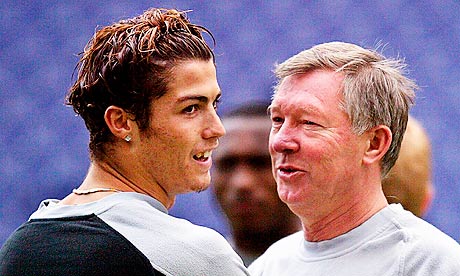
The transfer of Cristiano Ronaldo from Sporting Lisbon to Manchester United in 2003 included a hitherto undisclosed £1m payment to an unnamed agent, believed to be the Italian Giovanni Branchini, the Guardian can reveal.
The payment, which has never been made public before, emerged in the court battle in Porto which Ronaldo's agent, Jorge Mendes, is defending against the English football agency Formation.
Neither United, Branchini nor Mendes responded to questions from the Guardian about what Branchini, a senior agent based in Italy, did to merit payment in the £12.24m deal, when Mendes was Ronaldo's agent. In a defence document Mendes's Gestifute agency has filed with the Porto court, which the Guardian has seen, Gestifute said that it "did not receive any commission" from United directly when Ronaldo joined, but that Gestifute was paid by Branchini. At the time, according to Formation's claim, Mendes told them he had been paid €400,000 as his fee for negotiating Ronaldo's move. The Football Association, which has been required by court orders in Portugal and here to disclose all payments made through it on the Ronaldo deal, has confirmed that €150,000 was paid to Gestifute, while the rest of the £1.129m which United declared it paid in agents' fees went to "another agent".
These details of the landmark deal that took the dazzling 18-year-old to Old Trafford have emerged in the legal action Formation has brought against Gestifute in Porto. The English agency argues in its claim, seen by the Guardian, that it had a two-year partnership agreement with Gestifute, promoting Mendes's client players to English clubs, and that the agents' fees would be split equally.
Formation claims it shared fees after negotiating the first two moves to the UK for Gestifute players, Hugo Viana, to Newcastle, and Nuno Capucho, to Rangers, but that Mendes reneged on the deal once José Mourinho, also his client, went to Chelsea and signed the three Gestifute Portuguese players Ricardo Carvalho, Paulo Ferreira and Tiago Mendes. Formation says in its claim that it agreed to accept £80,000 from Mendes following Ronaldo's signing, rather than half the €400,000 that Mendes said United had paid him, because it wanted to preserve what had become a fruitful partnership.
However, after United disclosed in their 2004 accounts £1.129m paid to agents in the Ronaldo deal, Formation accused Gestifute in its court claim of having "concealed" the full amount of the fee, although it acknowledged that other agents may have been paid too.
Sir Alex Ferguson has always said that United signed Ronaldo after the teenager played mesmerically against United in a friendly with Sporting Lisbon on 6 August 2003 to open the Portuguese club's José Alvalade stadium. Other United sources have told the Guardian the club were planning to sign Ronaldo before that and allow him to mature further at Sporting but, with Arsenal also considering a bid, United snapped him up after his thrilling performance. Ronaldo joined United on 11 August, only five days later, and what duties Branchini performed on the deal, apparently acting for United, is unclear.
In its claim, Formation is asking the court to award it half of whatever fee Mendes's Gestifute agency did in fact receive for the Ronaldo deal, claiming that the signing was made within the two agencies' two-year partnership agreement to share fees equally. In its defence, Gestifute is arguing its partnership with Formation was not a genuine agency agreement that required it to share fees equally and, in relation to Ronaldo, that it was not paid commission by United, but by Branchini. Gestifute in Porto is defending Formation's claim for half the €2.9m Chelsea paid on the Carvalho, Ferreira and Tiago signings by arguing it was not paid anything, and that any fees were paid to Gestifute International Limited, a company registered in Ireland.
Both Branchini and Mendes declined to reply to a detailed series of questions asked by the Guardian, about why Branchini was paid in the deal and why, as claimed by Mendes, he then paid Gestifute. Gestifute did say in a statement about the Formation case: "This is a normal commercial dispute. The matter is being dealt with by our lawyers, and we are very confident that the court will decide on our favour."
United would not comment specifically on the payments the club made, but a spokesman said: "The deal was agreed, the correct payments made and we were delighted to secure Ronaldo who, with his hard work and our coaching, turned into the world's best player."

