Emanuel Macedo de Medeiros might not be as prominent a figure in the world of football as Michel Platini or Sepp Blatter, but if proposals that could change the landscape of European football are implemented, then he may well become so in future.


As chief executive of the Association of European Professional Football Leagues (EPFL), Medeiros has revealed how important reforms could be supported at the organisation's general assembly in Manchester on March 30 following a landmark meeting of the EPFL board in Madrid in just two weeks' time.

Medeiros was in London this week for a meeting on intellectual property rights and sports betting issues when ESPNsoccernet caught up with him ahead of the February 11 meeting in Madrid, which will set in motion the final stages of some of the biggest reforms in the history of the European game.

The formation of the Premier League in 1992, the change to three points for a win and the inception of the Champions League have been amongst the most startling changes to the game in the modern era. However, now the relatively new amalgamation of 950 professional clubs across 30 European nations have combined to become the most influential force outside of UEFA and FIFA, further change could be afoot.

Television income might have underpinned the formidable financial standing of the Premier League, but there may be an even bigger pot of gold in sight. The European leagues have united with governments throughout Europe and with the European Union in order to tackle the 'pirates' who use the clubs' intellectual rights on the internet and elsewhere, and the betting industry that uses the copyright of the clubs and the leagues. The EPFL estimates the industry is worth €14 to 17 billion across the continent.

In addition, the EPFL will tackle illegal betting, fraud and corruption, putting into place a universal code of conduct with severe punishments for anyone within football who breaches new, far stricter betting regulations within the game. The global fixture calendar will also be examined, and there will not be a winter World Cup in 2022 if the European leagues do not endorse it.

Medeiros uses the language of a diplomat urging radical change on a united front when explaining the principles upon which his organisation's planned reforms are founded.

He told ESPNsoccernet: "We stand for the future development [and] enhancement of the game, with a social conscience, seeking solutions for challenges of global dimension through global solutions. But we are taking a reformist approach. We are a constructive organisation. Our voice is sober and responsible, but equally we are promoting active reform. Indispensable reform."

So exactly what are the reforms that will change the game as we know it?

1. Intellectual rights

This is more of an imminent victory than a fight, as a triumph is within touching distance and ready to be endorsed at the two landmark meetings.

Medeiros explains: "The streaming of matches, logos, data, images and all the clubs' and the leagues' intellectual properties must be legally protected . This is football's main income source and, if duly protected, may form a new and extremely large source of income for the whole of the sport to benefit from. I cannot quantify how much, but it will be a significant amount. Without such ability to generate revenues and ensure its economic viability, how can sport continue investing in grassroots or sporting grounds and pursuing its social function to the full?

"To this end we have lobbied the European Union and all the national governments to open their eyes to the sport's legal rights. We are dealing with all sorts of pirating: people making money from football illegally, an endless number of websites streaming matches. This is all part of the new age digital piracy. We are making progress and we have European Commission and Parliament approval, including the recognition of the urgent need to protect all of football's content, all of these intellectual rights, which are vital to ensure sport's economic viability and social role."

2. Betting

Medeiros argues it is vital that football and other sports have in place proper controls on betting using intellectual rights - fixtures for example - in order that the clubs can profit from income and control illegal betting.

"There are different laws in different countries. Whereas France introduced a new law on May 1, 2010 opening up regulations regarding the ownership of the intellectual rights of the sports authorities and how it relates to the multitude of betting companies, there is at the moment a different and less satisfactory legislative approach in England. However, in England there has been a recent court ruling which recognised the fixture list is under the copyright protection bill. This was a positive development but the need to take legislative action still remains."

The EPFL praised the proactive approach by the French government. On March 2009, the Finance Minister Eric Woerth announced strong measures to protect the integrity of sporting competitions and ensure that organisers get a fair return from betting companies for the commercial exploitation of their fixture list and other property rights. Online sports betting is now permitted in France, but subject to a new licensing and regulatory regime, ensuring the sports authorities' involvement in the licensing process and in the decision as to what type of bets, if any, are to be allowed on their events, as well as ensuring a fair financial return.

Medeiros added: "Equally we need to ensure the integrity of our competitions from the threats posed by unlawful betting, fraud and corruption, to ensure that our sport remains credible and sound. There have been a number of irregular patterns detected around Europe, not in England I should point out, and they have been reported to the proper authorities."

In July 2008, the EPFL signed a memorandum of understanding with the European Sports Security Agency to detect irregular betting patterns and ensure, as much as possible, that professional football remains clean and free of corruption. As a result of that, a number of irregular betting practices have been signalled and brought to the attention of the concerned leagues. A code of conduct is ready to be put into place for the start of next season, once approved at the general assembly. It will include zero tolerance for anyone within football betting on any event they are involved in, directly or indirectly.

"We have all seen the problems of insider betting, and there is an urgent need for a proper code across all of Europe's leagues," Medeiros said. "All the new rules, which should be implemented by the leagues in accordance with their own sphere of competences, will come with the consequences if they are not respected. There is deep concern about betting, and our aim is preventative, but also to establish the proper dissuasive measures to deter it."

3. Financial stability and solidarity

This means backing the Platini blueprint for financial solidarity and financial transparency, and seeking to have the highest financial standards throughout all the leagues.

"Financial sustainability is the watchword," Medeiros explained, adding: "this means that even the big leagues, and the most powerful clubs, recognise the benefit of the smaller leagues and the smaller clubs. Interdependence of clubs has always been one of the key features of the European football model and the basis for its success and global appeal. This means collecting selling of rights but also equitable distribution of revenues and financial solidarity.

"We feel that UEFA's Financial Fair Play system is to be welcomed by the clubs to enable the clubs to be sustainable organisations. So we compliment UEFA on driving through club licensing system and sound financial criteria and taking on board our views. At the national level, we also want clearing houses for transfer of players, we want a sustainable and transparent football financial structure."

The EPFL is creating a database and assessing the different regulatory frameworks that concern club ownership and fit and proper persons tests. It hopes to ensure that clubs remain independent and free from any detrimental control and influence.

4. Fixtures and the 2022 World Cup

The size of the leagues, when games are played and when the World Cup takes place are issues that are all high on the agenda. If FIFA still has any lingering thoughts of a winter World Cup in 2022 or any other time, they will need to have the approval of the united European leagues.

All Medeiros would say regarding the World Cup situation is that "there is a board meeting in Madrid in two weeks' time". In other words: watch this space.

As for the Champions League, Medeiros says "it has proved to be the crème de la crème of international club competition, which everyone including the fans are happy with. That doesn't mean that, together with UEFA and the clubs, as ever in a constructive fashion, there cannot be room for dialogue on possible means of improving the distribution of revenues and financial solidarity".

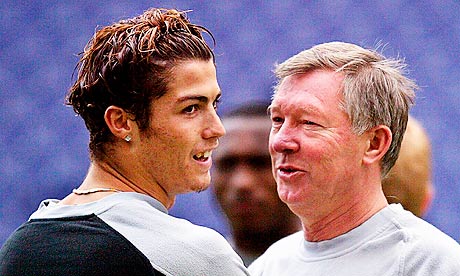


The transfer of Cristiano Ronaldo from Sporting Lisbon to Manchester United in 2003 included a hitherto undisclosed £1m payment to an unnamed agent, believed to be the Italian Giovanni Branchini, the Guardian can reveal.

The payment, which has never been made public before, emerged in the court battle in Porto which Ronaldo's agent, Jorge Mendes, is defending against the English football agency Formation.

Neither United, Branchini nor Mendes responded to questions from the Guardian about what Branchini, a senior agent based in Italy, did to merit payment in the £12.24m deal, when Mendes was Ronaldo's agent. In a defence document Mendes's Gestifute agency has filed with the Porto court, which the Guardian has seen, Gestifute said that it "did not receive any commission" from United directly when Ronaldo joined, but that Gestifute was paid by Branchini. At the time, according to Formation's claim, Mendes told them he had been paid €400,000 as his fee for negotiating Ronaldo's move. The Football Association, which has been required by court orders in Portugal and here to disclose all payments made through it on the Ronaldo deal, has confirmed that €150,000 was paid to Gestifute, while the rest of the £1.129m which United declared it paid in agents' fees went to "another agent".

These details of the landmark deal that took the dazzling 18-year-old to Old Trafford have emerged in the legal action Formation has brought against Gestifute in Porto. The English agency argues in its claim, seen by the Guardian, that it had a two-year partnership agreement with Gestifute, promoting Mendes's client players to English clubs, and that the agents' fees would be split equally.

Formation claims it shared fees after negotiating the first two moves to the UK for Gestifute players, Hugo Viana, to Newcastle, and Nuno Capucho, to Rangers, but that Mendes reneged on the deal once José Mourinho, also his client, went to Chelsea and signed the three Gestifute Portuguese players Ricardo Carvalho, Paulo Ferreira and Tiago Mendes. Formation says in its claim that it agreed to accept £80,000 from Mendes following Ronaldo's signing, rather than half the €400,000 that Mendes said United had paid him, because it wanted to preserve what had become a fruitful partnership.

However, after United disclosed in their 2004 accounts £1.129m paid to agents in the Ronaldo deal, Formation accused Gestifute in its court claim of having "concealed" the full amount of the fee, although it acknowledged that other agents may have been paid too.

Sir Alex Ferguson has always said that United signed Ronaldo after the teenager played mesmerically against United in a friendly with Sporting Lisbon on 6 August 2003 to open the Portuguese club's José Alvalade stadium. Other United sources have told the Guardian the club were planning to sign Ronaldo before that and allow him to mature further at Sporting but, with Arsenal also considering a bid, United snapped him up after his thrilling performance. Ronaldo joined United on 11 August, only five days later, and what duties Branchini performed on the deal, apparently acting for United, is unclear.

In its claim, Formation is asking the court to award it half of whatever fee Mendes's Gestifute agency did in fact receive for the Ronaldo deal, claiming that the signing was made within the two agencies' two-year partnership agreement to share fees equally. In its defence, Gestifute is arguing its partnership with Formation was not a genuine agency agreement that required it to share fees equally and, in relation to Ronaldo, that it was not paid commission by United, but by Branchini. Gestifute in Porto is defending Formation's claim for half the €2.9m Chelsea paid on the Carvalho, Ferreira and Tiago signings by arguing it was not paid anything, and that any fees were paid to Gestifute International Limited, a company registered in Ireland.

Both Branchini and Mendes declined to reply to a detailed series of questions asked by the Guardian, about why Branchini was paid in the deal and why, as claimed by Mendes, he then paid Gestifute. Gestifute did say in a statement about the Formation case: "This is a normal commercial dispute. The matter is being dealt with by our lawyers, and we are very confident that the court will decide on our favour."

United would not comment specifically on the payments the club made, but a spokesman said: "The deal was agreed, the correct payments made and we were delighted to secure Ronaldo who, with his hard work and our coaching, turned into the world's best player."


Acaba 2010, tercer año consecutivo que el Real Madrid cierra sin títulos. Tan buen momento como otro cualquiera para echar la vista atrás y repasar las actuaciones individuales de los integrantes de la plantilla madridista, incluyendo a su entrenador, José Mourinho.


Iker Casillas (9): Fundamental en el Madrid y en la selección, aunque sólo España le da alegrías últimamente. En el Mundial refrendó la consideración unánime de mejor portero del planeta, con intervenciones decisivas en el primer Mundial conquistado por el combinado nacional. Con la llegada de Mourinho tuvo unas primeras semanas de escasísimo trabajo, pero después, cuando se le ha exigido más, ha respondido como suele. No tuvo nada que hacer en el 5-0 del Camp Nou.

Ricardo Carvalho (7): Fichaje en principio sorprendente, cuyo rendimiento destacó positivamente en los primeros partidos del curso. En realidad, no hizo sino confirmar las virtudes que de él se esperaban: central fiable, experto y contundente si hacía al caso. En su contra, un número de tarjetas excesivo para estas alturas de la temporada.

Pepe (6): Con Pepe no hay término medio. Para muchos, está entre los cinco mejores centrales del mundo; para otros muchos, pierde la cabeza con más frecuencia de la que se puede permitir en un central del Real Madrid. Inmerso en pleno proceso de renovación, lo que puede haber contribuido a incrementar su inestabilidad.

Sergio Ramos (5): Se puede decir lo mismo que en el caso anterior. Hizo un gran Mundial, pero en el Madrid su rendimiento ha bajado muchos enteros. Con Mourinho tiene menos obligaciones ofensivas, pero también en defensa muestra recurrentes lagunas tácticas, que muchas veces compensa a base de físico. Incidentes como el penalti ante el Athletic o la rueda de prensa posterior al batacazo de Barcelona están lejos de lo que se espera de un segundo capitán del Madrid.

Mahamadou Diarra (5): Apura sus últimos días en el Madrid, club en el que siempre ha estado por debajo del futbolista que llegó a España en 2006, previo pago de 27 millones de euros, tras acorazar el centro del campo del Olympique de Lyon. Mou le utiliza para cerrar los partidos y, de momento, ningún punto se ha ido con su entrada al campo.

Cristiano Ronaldo (9): En ningún otro club del mundo habría debate sobre su figura. El enorme futbolista que es estaría siempre por encima de su ego. Cristiano lo tiene, y muchas veces sobredimensionado, pero su impacto en el juego ofensivo del Madrid es simplemente brutal. No sólo es insustituible, sino absolutamente básico en cualquier proyecto que pretenda hacer que el Madrid recupere la hegemonía en el fútbol español y europeo. Si, además, pusiera de su parte para mejorar su imagen, mejor que mejor. Pero lo primero que se le exige son goles, no ganar concursos de popularidad.

Benzema (6): Lleva año y medio en el Madrid y aún no sabemos si es el doctor Jekyll o Mister Hyde. Básicamente ha sido una versión mustia de sí mismo, pero sus buenas actuaciones ante Auxerre y Levante mantienen viva la llama de la esperanza de aquellos madridistas -ya no todos, cierto- que aún confían en que esta versión estilizada del gran Ronaldo acabe triunfando en el Madrid. Porque, con este jugador, existe la sensación de que, si no es de blanco, acabará explotando en otro sitio.

Lass (6): Una incógnita envuelta en un enigma. Es tan posible que abandone el Madrid en este mercado de invierno como que se asiente como titular. Y que lo haga como centrocampista o como lateral. Si alguien le conoce (lo que no quiere decir que le comprenda) es Mourinho, especialista en casos difíciles. Y éste lo es.

Granero (7): Su mayor mérito es saber aprovechar las escasas oportunidades que, a priori, le concede un dibujo en el que el cupo para el centrocampista de talento empieza y acaba con Xabi Alonso. Curiosamente, con muchos menos minutos que la temporada pasada, se está dejando ver más, dejando atrás esa fama de futbolista intrascendente durante largas fases de los partidos. Ha sido, por ahora, la mejor pareja de Alonso en el doble pivote, aunque no parece probable que Mourinho cambie su idea de blindar al vasco con futbolistas de más músculo.

Marcelo (8): Sorprendentemente, muchos parecen haberle descubierto este año, cuando lo cierto es que la temporada pasada ya fue uno de los mejores futbolistas del Madrid. Su peso en el juego ofensivo del equipo es incuestionable. Es el único defensa capaz de sacar el balón jugado desde atrás, sabe elegir los momentos para subir y, cuando lo hace, suele causar importantes destrozos en las defensas rivales, ya que, además, coincide con la zona de influencia de Cristiano. Se atreve con todo. En su debe, como el año pasado, la defensa. Aunque ha mejorado, cuando le exigen atrás, sigue sufriendo.

Xabi Alonso (7): Es, sin duda, el mejor centrocampista del equipo. Su peso en el equipo es evidentemente doloroso en sus ausencias (Lyon en la Champions anterior, Sevilla…). Sabe construir y destruir, lo que le convierte en un jugador sin recambio en la plantilla del Madrid, en la que todos los centrocampistas tienen bien un perfil, bien el otro. Puede que Xabi no sea un 10 en nada, pero normalmente garantiza un rendimiento entre el aprobado y el notable. Además, el Bernabéu le admira y, aunque no por antigüedad, es ‘de facto’ uno de los capitanes del equipo sobre el campo y en el vestuario.

Arbeloa (6): Prototipo de jugador del equipo, que lo mismo vale para un roto que para un descosido. Puede actuar en todas las posiciones de la defensa, ofreciendo siempre un rendimiento aceptable. Ha cumplido siempre como sustituto de Ramos, dejando esa cuestión abierta al debate, ya que muchos prefieren la sobriedad del salmantino a los excesos del sevillano. En su contra, un repertorio ofensivo más limitado.

Higuaín (8): El perro de Mou. El primero en la presión, el que siempre tira el desmarque, el que siempre abre huecos para el compañero y el que (casi) siempre marca. El problema de Higuaín es que parece vivir una reválida constante, que él mismo alimenta con algunos errores inexplicables. Pero, sin duda, se trata del futbolista que más ha progresado en la historia reciente del club. Y lo ha hecho jugando en el Madrid, no en el Castilla, y a la sombra de los Ronaldo, Raúl, Van Nistelrooy… Mucho mérito. Mucho crédito.

Pedro León (6): Protagonista indirecto de uno de los famosos incendios de Mou, poco a poco va recordando que se trata no sólo de un buen futbolista, sino de un futbolista distinto, de un perfil que nadie más tiene en el Madrid. Jugador de banda, elegante, con un guante en la derecha para los centros y un martillo para el disparo. Evidentemente, no es Zidane, ni Di Stéfano, pero tiene virtudes que pueden ser muy útiles al equipo.

Di María (9): El fichaje de la temporada. Tardó un suspiro en liberarse del lastre de su costoso fichaje (25+11) y de la sombra de la duda que sembró en el gris Mundial de Argentina. Es desequilibrante, rápido, atrevido y generoso, el tipo de jugador que cautiva al Bernabéu. Además, está marcando bastantes goles (más de los que suele), y goles importantes. Fue uno de los grandes damnificados del Camp Nou, pero el partido no sólo le vino grande a él. Tiene sólo 22 años, no lo olvidemos.

Özil (8): También fue señalado tras el 5-0, pero un partido no debería enterrar el talento de un jugador que, salvando las distancias, deja detalles que el Bernabéu no veía desde los tiempos de Zidane. Özil es puro talento, además del jugador clave en el mejor argumento ofensivo de los blancos en este primer tramo del curso: el contragolpe. Con espacios abiertos, su visión de juego es letal. Dejó una asistencia deliciosa para Benzema en el mejor gol blanco de la temporada. En su debe, irregularidad y mucho mejor rendimiento en casa que fuera. Paciencia, de nuevo. También sólo 22 años.

Khedira (5): A Mourinho le encanta, aunque a muchos les cuesta entender por qué. Dicen que a Xabi le viene bien tenerle a su lado, pero en otros partidos, con Lass o Granero, el equipo también ha funcionado razonablemente bien. Nadie le puede negar su espíritu estajanovista, pero de un centrocampista del Madrid se suele esperar algo más. Partió como titular indiscutible, pero en los últimos partidos del año ha perdido esa condición. Veremos cómo le va en 2011.

Dudek (8): Nota alta. Sólo ha jugado 45 minutos, pero estuvo muy bien, salvando dos goles ante el Auxerre, poco antes de romperse la mandíbula en un choque fortuito con un rival. Merece tener algún minuto más para despedirse sobre el campo, y que no sea sólo recordado por el ‘Ajaxgate’.

Adán (7): Suplió a Dudek en el mismo partido, y también lo hizo bien. Sacó un mano a mano y presentó credenciales ante un Bernabéu ansioso por descubrir canteranos.

Albiol (7): Una lesión le hizo perder el paso en la carrera por la titularidad, en la que, de todas formas, partía en desventaja ante Pepe y Carvalho. Pero el central valenciano ha demostrado ser algo más que un buen suplente. Es fiable, no pierde la concentración y tiene una aceptable salida de balón. Mourinho sabe que puede recurrir a él sin que el rendimiento de la zaga se resienta.

Canales (5): Dos esguinces prácticamente consecutivos han impedido a Canales mostrar en el Madrid el talento que exhibió en el Racing. Antes de las lesiones tuvo pocos minutos, aunque en pretemporada sí dejó detalles. Es una inversión a largo plazo, un jugador con el que hay tener paciencia.

Morata (7): Dos ratos en dos partidos sencillos han permitido al gran público descubrir a Morata, una de las perlas de Valdebebas. Aunque, en pretemporada, Mourinho le situó en banda, su posición ideal es centrado. Sabe jugar de espaldas gracias a su potente físico, pero tiene habilidad con el balón en los pies. Y descaro. Ese golito que no fue ante el Levante le hubiera venido de perlas, pero si algo tiene Morata es tiempo.

Sarabia (7): Sólo jugó unos minutos ante el Auxerre, pero suficientes para dejar constancia de su calidad. Se ubicó como interior zurdo y se mostró como un jugador fino y vertical. Tampoco anda corto de atrevimiento.

José Mourinho (8): Aunque él se puntuó muy por encima, sabe mejor que nadie que 25 partidos no hacen una temporada. Mou contaba, claro, su triplete con el Inter, pero los años naturales casan mal con las temporadas futbolísticas.

Mou llegó al Madrid como último cartucho de Florentino Pérez, que le entregó las riendas de su proyecto más ambicioso. En poco tiempo, dotó al equipo de un estilo reconocible (4-2-3-1, presión arriba y defensa adelantada) que permitió a los blancos transitar con firmeza por los primeros meses de la competición. Pero el 5-0 del Camp Nou lo dejó muy tocado. No tanto de cara al exterior como ante sí mismo. La derrota pareció dejarle sin energías, estado al que sin duda han contribuido las numerosas (y, en muchos casos, innecesarias) polémicas en las que Mou se ha visto envuelto desde su llegada a España. Tras el incandescente partido ante el Sevilla, volvió a aparecer el entrenador que no ha llegado al Madrid “para hacer amigos” (Butragueño dixit), ni siquiera en su propio club. Sin lugar a dudas: bueno para el Madrid.

(*) Kaká y Gago no han jugado ningún minuto, al igual que Juanfran, mientras que Garay y Mateos suman sólo 17 y 11, respectivamente, en un partido de Champions, insuficientes para ser calificados.


Former England captain David Beckham is to receive the BBC Sports Personality Lifetime Achievement award on Sunday.

The 35-year-old midfielder is England's most capped outfield player and won six Premier League titles and the Champions League crown with Manchester United.

He won the Spanish league with Real Madrid after a £25m move from United before joining Los Angeles Galaxy and also spent two loan spells at AC Milan.

In 2001 Beckham was named BBC Sports Personality of the Year.

The lifetime honour is one of several awards which will be presented during the BBC Sports Personality of the Year show from 1900 GMT on Sunday.

"David's record on and off the pitch has been remarkable," BBC Sports Personality of the Year editor Carl Doran said.

"It's a fitting reward for an outstanding career as a player and for his tireless work as an ambassador for British sport. He has also been a tremendous role model and I'm sure he'll get an amazing reaction from the public in Birmingham."

Nine years ago Beckham won the main award, voted for by the public, after an outstanding display for England against Greece in which his late free-kick earned the national side a place in the 2002 World Cup finals.

His England career began in September 1996 against Moldova with his latest, and 115th, cap coming against Belarus in October 2009. He also captained England 59 times in that period.

Having appeared and scored in the previous three World Cups, Beckham was expected to be selected for the tournament in South Africa in 2010.

But the player, who hails from east London, tore his Achilles tendon while on loan from LA Galaxy at AC Milan in March, and was ruled out of what would have been his fourth World Cup.

His celebrated England career owes a lot to the 10 years he spent at Old Trafford under the guidance of Manchester United manager Sir Alex Ferguson, who won the first BBC lifetime award in 2001.

Having been part of United's venerated FA Youth Cup-winning side of 1992, Beckham went on to lift nine major trophies with the club.

One of his most memorable years was in 1999, when he helped United win the Treble. His corners led to the two late strikes which allowed the Red Devils to fight back from a goal down to beat Bayern Munich 2-1 in a dramatic Champions League final at Barcelona's Nou Camp.

It was also the year that the midfielder married former Spice Girl Victoria Adams, and the couple have three sons.

Beckham moved on to Real in 2003, where he played alongside the likes of Zinedine Zidane, Luis Figo, Raul and Roberto Carlos.


During his final season, 2006-2007, he won his only league title with the Madrid side, pipping Barcelona to the crown on the final day of the season.

A move to Major League Soccer in the United States with LA Galaxy followed and also two loan periods at Italian giants AC Milan.

Beckham lives in Los Angeles with his family but regularly returns to Britain and was a key member of the England 2018 World Cup bid, which lost out to Russia in the vote earlier in December.